
Don’t know where to start knitting? Have a look at this Quick Knitting Guide for Beginners to start your journey with ease and confidence!
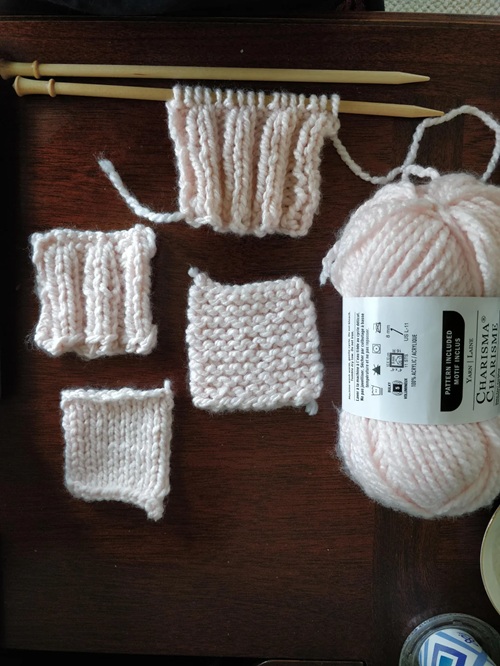
When you are trying the knitting for the first time, you might feel confused. Why? It is because there are so many yarns, needles, and stitches to choose from. But don’t worry, sit back, we have got you covered. Just check out this beginner’s guide that’ll help you create useful and decorative pieces in no time.
Quick Knitting Guide for Beginners
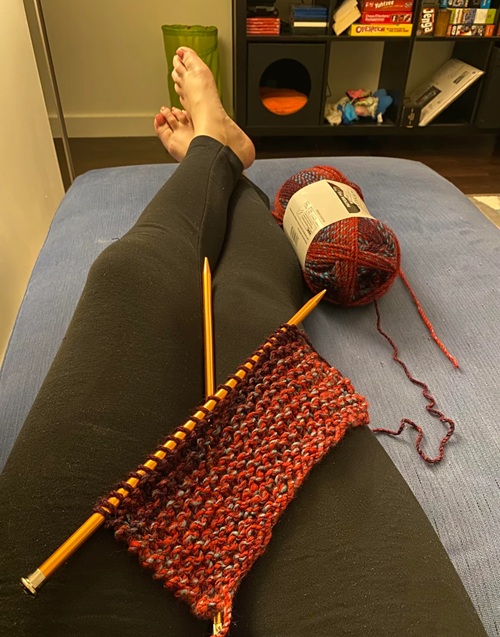
Knitting isn’t just about creating things out of patterns. But it’s also about learning how different tools and materials work together. Once you understand this and how basic stitches are formed, the whole process starts to feel much easier. Instead of guessing on your own, check out this helpful guide to focus more on enjoying the craft and creating scarves, sweaters, blankets, and many more.
Basic Knitting Supplies
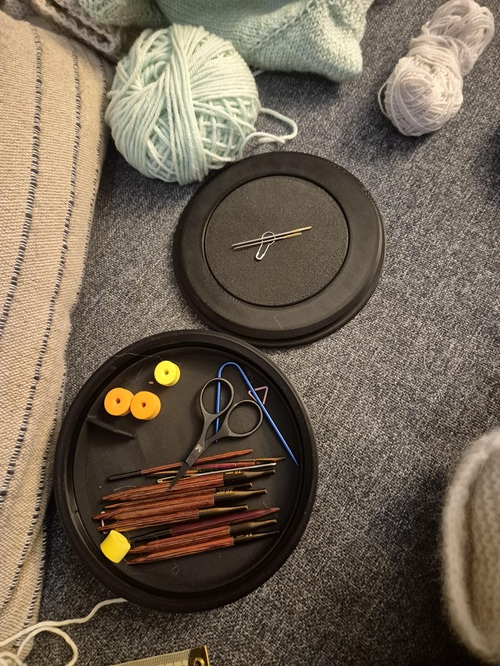
To get started with knitting, you only need a few essential supplies. You can easily find them at any craft store, and they are affordable, too.
1. Yarn
The very first thing is choosing the right yarn. As a newbie, it’s suggested to start with worsted-weight yarn. It’s easy to handle, and you can see stitches clearly.
2. Knitting Needles
Knitting needles come in different sizes and materials. So which one will be good for a newbie knitter? Go with a medium-sized pair of straight needles to start your knitting journey. Once you gain confidence, you can move on to circular needles. It’s used in multiple projects, such as blankets and sweaters.
3. Scissors
Then come the scissors, which are essential for cutting yarn and trimming loose ends. Any pair will do, but keeping a dedicated pair with your knitting supplies makes it easier to finish projects neatly.
4. Tapestry Needle
To give your project a neat and proper finish, a tapestry needle is used. The sharp tip makes it easy to pass through stitches without splitting the yarn.
5. Measuring Tape
As you work, you can also use a measuring tape to check the size of your project. It also helps you check the gauge and maintain consistency throughout your process.
6. Stitch Markers
As a newbie, you can also use stitch markers. They might look small, but they are very useful. They help in marking stitches, pattern repeats, or rows to keep track of your progress and avoid mistakes.
With these simple tools, you’ll have everything you need to start your first knitting project with confidence.
Basic Knitting Stitches
Are you thinking to try a knitting project? Just wait! First, it’s quite important to learn about some of its basic stitching techniques. Without them, you can’t do anything in this craft.
1. Cast On
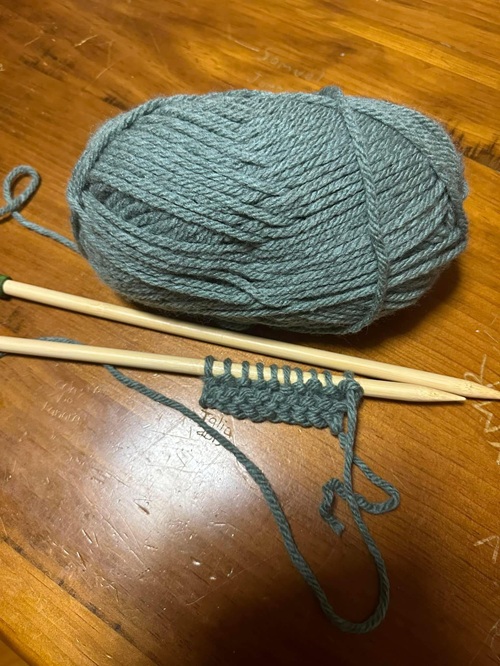
The first step in knitting and the starting point of every project is the cast-on stitch. It’s the first row of loops on your needle that determines how your piece begins. It provides structure and support for the other stitches as well.
2. Knit Stitch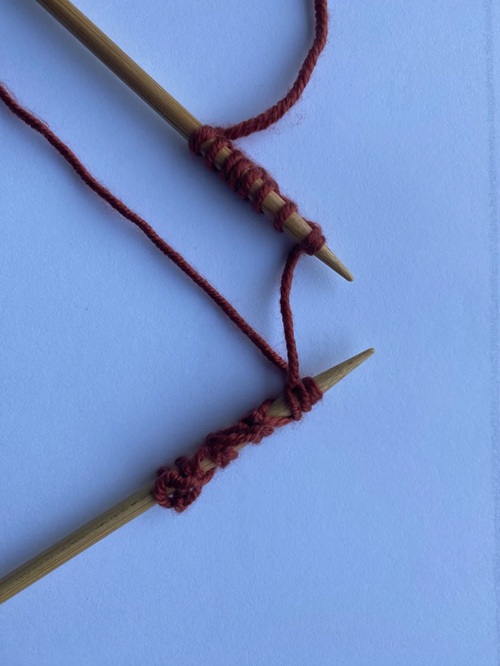
Then comes the knit stitch, which is the most basic and commonly used stitch this craft. It creates a V-shaped pattern on the fabric. Plus, it’s the starting point for many stitch patterns, textures, and designs used in knitting projects.
3. Purl Stitch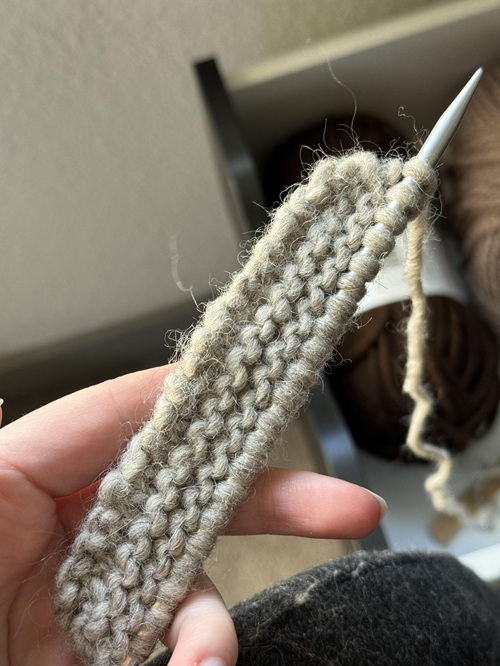
But the purl stitch is just the opposite of the knit stitch. It creates a small bump texture on the fabric. Not to say, but it is used with many different forms to create patterns, textures, and stitch designs.
4. Garter Stitch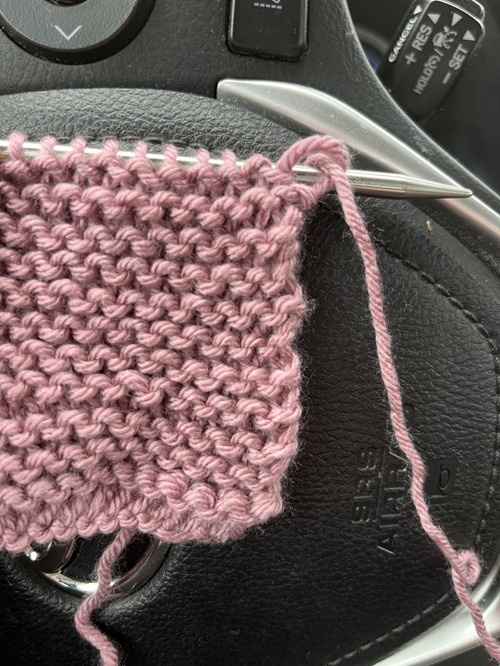
Garter stitch is worked by knitting stitches in every row. It produces a stretchy, textured fabric that lies flat and is perfect for beginners. Plus, it works well for easy projects like washcloths, hot pads, scarves, and simple blankets.
5. Stockinette Stitch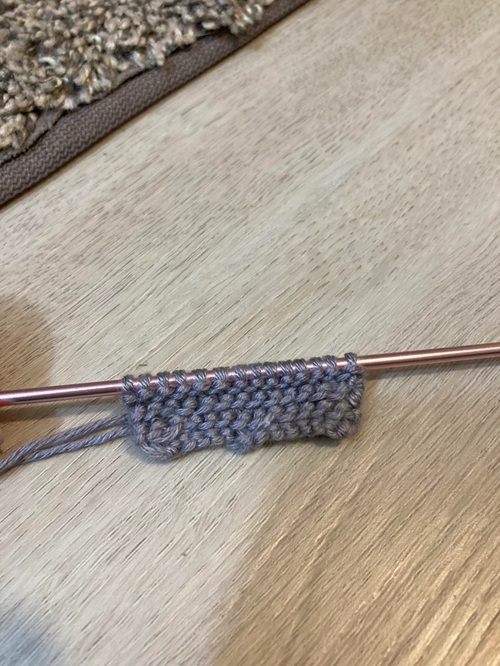
If you’re a pro at knit and purl, then learning the stockinette stitch will be easy. But the only drawback of stockinette is that the edges tend to curl.
Types of Knitting Needles
Knitting needles come in different types, sizes, and materials, so it might be a little tough as a newbie to choose the correct one. Have a look at this quick guide for basic knowledge of needles.
1. Straight Needles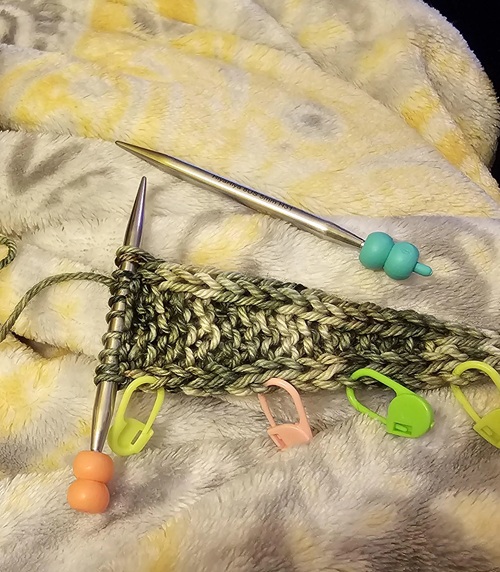
They are the classic ones that everyone uses when they start their knitting journey. Most of the time, you will get them in a set of two with a knob or a supporter at the end. And are used for mostly flat projects, such as scarves and dishcloths.
2. Circular Needles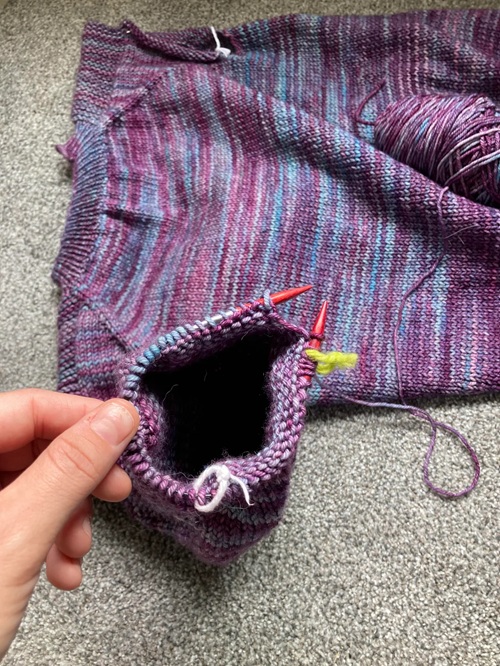
When working in round don’t forget about these circular needles. They have two needle tips joined by a flexible cable. The best part? You can use them for both flat knitting and projects such as hats or sweaters.
3. Double-Pointed Needles (DPNs)
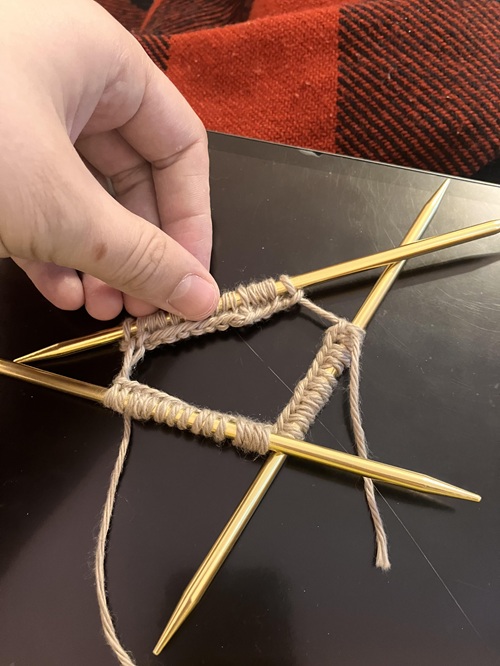
These DPNs feature a pointed tip on both ends. They are especially helpful when working in the round on projects that are too small for circular needles. You can use these needles for knitting small items like socks, sleeves, or mittens.
Types of Yarn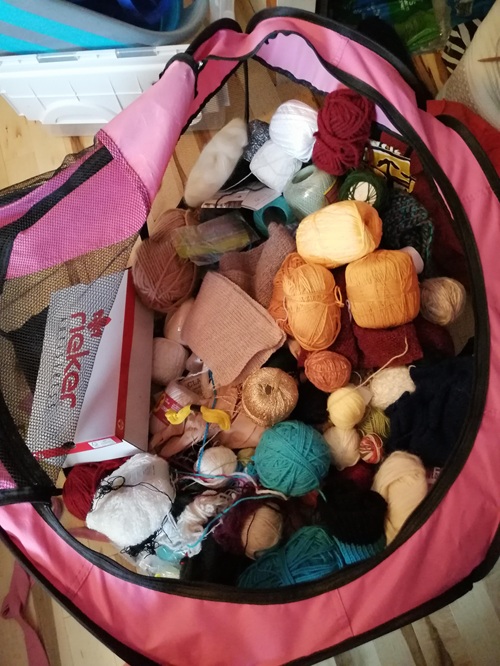
Yarn comes in a wide variety of fibers, textures, and weights. Understanding the different types of yarn helps you choose the right one for starting your knitting journey.
Based on Yarn Weight
-
Lace
This yarn is the lightest weight, used for airy shawls, wraps, and intricate stitch patterns. It creates a fabric with beautiful drape and is best suited for projects that focus on detail.
- Fingering/Sock
Fingering yarn produces a smooth, fine fabric that works well for projects that need durability. It’s perfect for socks, baby garments, and other clothing.
- DK (Double Knit)
This yarn is somewhat between lightweight and medium thickness. It’s commonly used for garments and everyday accessories because it creates a balanced fabric that isn’t too thin or too heavy.
- Worsted
Worsted yarn is a medium-weight yarn that’s easy to handle and widely used by beginners. The yarn works well for sweaters, hats, scarves, and blankets, providing warmth while maintaining clear stitch definition.
- Bulky
Bulky yarn is thick and warm, perfect for winter projects. Because of its size, it knits up fast and creates soft, textured pieces that are perfect for cozy accessories and home decor.
- Super Bulky
The super-bulky yarn is extra-thick and perfect for quick results. It’s commonly used for chunky cardigans, oversized scarves, and statement pieces.
Based on Yarn Fibre
- Cotton
Cotton yarn is the most preferred choice for summer wearables. It is breathable, smooth, and comfortable against the skin, making it perfect for summer. Plus, it is stretchy, which hold their shape well and gives stitches a clean, neat look.
- Wool
Wool yarn is a natural fibre that is obtained from the fleece of sheep. It’s warm, elastic, and naturally insulating, making it perfect for sweaters, hats, scarves, and winter accessories.
- Acrylic
Acrylic yarn is affordable, durable, and easy to care for, which makes it especially beginner-friendly. It is widely available in many colours and works well for blankets and other everyday items that need frequent washing.
- Blends
Blended yarn combines two or more fibres to balance their qualities. For example, a wool–acrylic blend offers warmth from wool and durability from acrylic, creating a practical yarn that’s comfortable, strong, and often easier to maintain.
- Bamboo/Silk
Bamboo and silk yarns are soft, smooth, and beautifully drapey, giving finished projects a luxurious feel. They’re often used for lightweight garments, shawls, and special pieces where shine, softness, and fluid movement matter.